
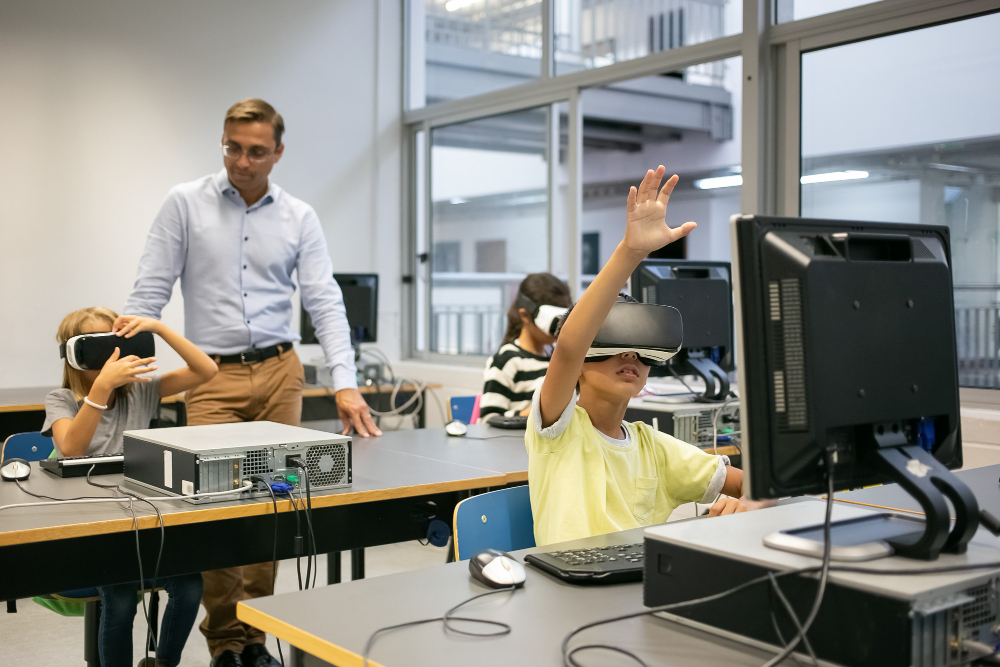
Technology has become a driving force in modern education, remodelling teaching techniques, learning experiences and institutional structures worldwide. The traditional classroom learning experience, restricted to chalkboards, textbooks and face-to-face instruction, has diversified into a digitally enriched environment. In India, as in many other countries, technology has played a very important role in improving access to quality education, strengthening learning outcomes and handling long-standing systemic challenges. This essay examines the role of technology in modern education, with an emphasis on its significance within the Indian educational context.
One of the most substantial contributions of technology to education is empowering individuals (students) through widespread access to educational resources. Digital platforms help students access educational resources beyond the confines of traditional classrooms and libraries. In India, initiatives such as DIKSHA, SWAYAM and the National Digital Library of India have made valuable academic content accessible to students from various socio-economic backgrounds.
Technology has emerged as a powerful catalyst for boosting educational inclusion, and these platforms help to bridge geographical barriers for learners in rural and remote locations, who may lack access to good schools or properly trained teachers. Technology is being more actively centred on learners. The Indian education system has often prioritised rote memorisation and examination-oriented learning. However, digital tools such as learning management systems, multimedia content and online discussion forums motivate students to engage effectively with the subject matter. Through engaging videos, quizzes and team-oriented assignments, learners can foster analytical skills, promote reasoning, enhance evaluative thinking, and improve communication and problem-solving skills. This move aligns with the objectives of the NEP (National Education Policy) 2020, which highlights practical learning, foundational knowledge and creativity rather than passive learning.
Another prominent role of technology in modern education is the marketing of tailored learning. Not all students can learn at the same pace or in the same way, and technology helps to resolve this issue. Dynamic education platforms use data analysis to evaluate students’ progress and tailor content suitably. In India, ed-tech companies such as Byju’s, Vedantu and Unacademy have implemented customised educational models that address personal abilities and challenges. This approach has been notably helpful for competitive exam preparation, where personalised practice and feedback can substantially boost results.
Technology has also changed assessment and evaluation systems. Virtual exams, computerised tests, and an automated assessment system provide quicker feedback and enhanced monitoring of student performance. During the COVID-19 pandemic, Indian educational institutions switched to online assessments and internal tests to maintain continuity in learning. While this dynamic shift raised concerns about educational integrity and impartiality, it also focused on the power of technology to reform assessment methods. When combined with ethical guidelines and open regulations, digital assessment tools can boost productivity and objectivity.
The role of technology in Indian education became especially notable during the COVID-19 pandemic, when schools and universities rapidly adapted to virtual learning. Platforms such as Google Classroom, Zoom and Microsoft Teams became crucial to the teaching and learning process. Although the shift uncovered obstacles such as a lack of suitable devices, poor internet connectivity and inadequate digital literacy, it also showed the robustness and flexibility of educational systems. The pandemic has led to the adoption of technology and an integrated blended learning system as the norm, which is still practised in numerous Indian educational bodies today.
Despite having many benefits, the incorporation of technology in education shows major obstacles, specifically in the Indian context. The technology gap is a major concern, as many learners lack access to laptops, smartphones or steady internet connections. This disparity risks increasing the gap between the privileged and underprivileged students. Moreover, fewer face-to-face interactions, excess screen time and over-reliance on technology can adversely affect students’ psychological well-being and social development.
Another critical challenge is educator training and readiness. Impactful use of educational technology requires educators to be technologically skilled and a pro in teaching. While initiatives under NEP 2020 highlight educator skill development, execution is inconsistent. Without effective training and institutional support, technology may be used superficially rather than substantially. Moreover, issues related to surveillance, data privacy and marketisation of education through private ed-tech platforms require careful regulation.
In conclusion, technology revolutionises contemporary education by enhancing accessibility, fostering learner-centred and tailored instruction, adopting advanced assessment techniques and facilitating adaptable learning models. In India, tech-based interventions can address entrenched disparities in education and improve learning quality at a large scale. However, to fully uncover these benefits, challenges such as the technology gap, teacher preparedness and ethical issues should be resolved through inclusive policies and sustained investment. As education continues to evolve, technology will be a primary impetus in shaping the future of learning in India and beyond.
Works Cited (MLA)
Holmes, Wayne, et al. Artificial Intelligence in Education: Promises and Implications for Teaching and Learning. Centre for Curriculum Redesign, 2019.
Means, Barbara, et al. “The Effectiveness of Online and Blended Learning: A Meta-Analysis.” Teachers College Record, vol. 115, no. 3, 2014, pp. 1–47.
Ministry of Education, Government of India. National Education Policy 2020. Government of India, 2020.
OECD. Education Responses to COVID-19: Embracing Digital Learning and Online Collaboration. OECD Publishing, 2020.
Selwyn, Neil. Education and Technology: Key Issues and Debates. Bloomsbury Academic, 2016.
Author Bio:

Vijayshree is a self – motivated, enthusiastic professional with a strong interest and passion for art, fashion and style. She has pursued an MBA in International Business & completed her graduation in mass media; specialised in Journalism from the University of Mumbai. She is also a corporate fashion columnist for a corporate magazine.